
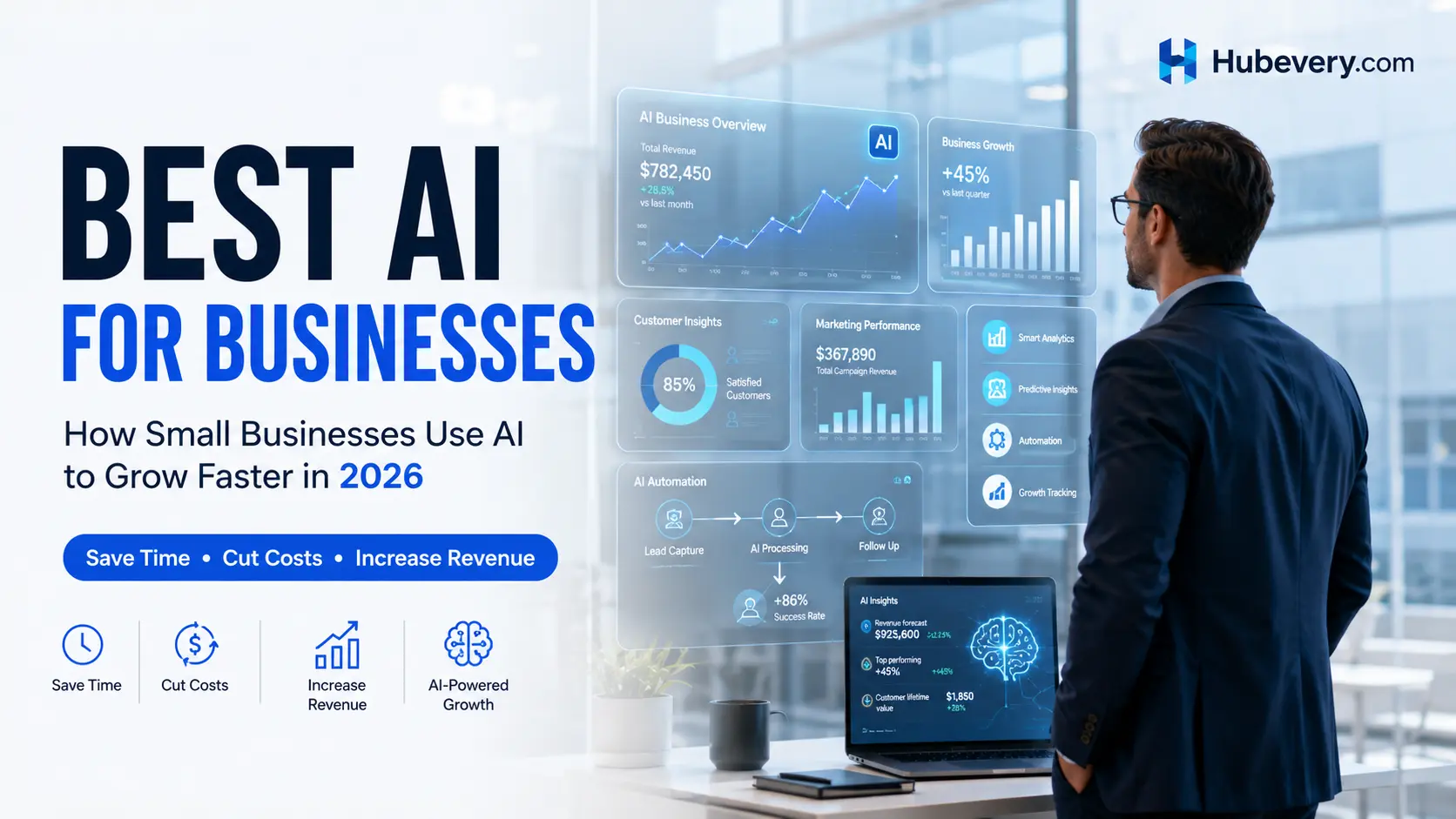
The Rise of AI: Why Small Businesses Can No Longer Ignore It
Running a small business in America has always required determination, resilience, and the ability to adapt. Every day, business owners juggle countless responsibilities, from managing employees and serving customers to handling marketing, finances, and operations. Unlike large corporations that have dedicated departments for each task, small business owners often find themselves doing everything at once. This constant pressure can make growth feel difficult, especially when resources are limited and competition continues to increase.
However, artificial intelligence is changing the playing field in ways that were unimaginable just a few years ago. What was once considered an expensive technology available only to major corporations has now become accessible to businesses of every size. Today, entrepreneurs can use AI-powered tools to automate repetitive work, improve customer experiences, and make smarter decisions without hiring additional staff. As a result, many owners are searching for the best AI for businesses because they recognize that AI is no longer a luxury. Instead, it has become a practical tool that can help companies grow faster while operating more efficiently.
For many small business owners, AI feels like adding a highly skilled assistant to the team. It works around the clock, handles routine tasks, and provides valuable insights that help business leaders focus on what truly matters. As competition continues to evolve, businesses that embrace AI are discovering new opportunities to increase productivity and create sustainable growth.
Why Small Businesses Are Embracing AI Faster Than Ever
The rapid adoption of AI among small businesses is not happening by accident. Business owners are constantly looking for ways to save time, reduce costs, and improve results. Traditional methods often require significant investments in staff, software, and training. AI, on the other hand, allows companies to achieve more with the resources they already have.
A major reason for this shift is that modern AI tools are designed for everyday users rather than technical experts. Business owners no longer need programming knowledge to take advantage of artificial intelligence. Many platforms provide simple interfaces that make implementation quick and straightforward. As a result, even a small local company can access capabilities that were previously available only to large enterprises.
Another important factor is the growing pressure to meet customer expectations. Consumers today expect faster responses, personalized experiences, and seamless interactions. Businesses that fail to meet these expectations risk losing customers to competitors. AI helps bridge this gap by enabling companies to deliver a higher level of service without dramatically increasing operational expenses.
Again, the true power of AI extends beyond automation. It allows businesses to analyze information, identify patterns, and make data-driven decisions more confidently. This combination of efficiency and intelligence is what makes AI such a valuable asset for modern organizations.
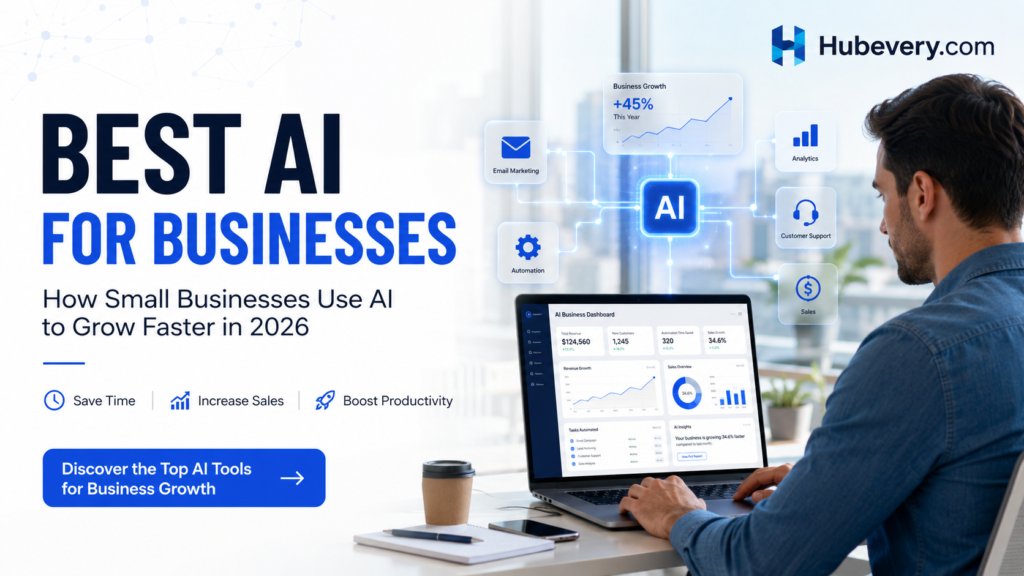
How AI Saves Valuable Time for Small Business Owners
Time is one of the most valuable assets any entrepreneur possesses. Unfortunately, much of that time is often consumed by repetitive administrative tasks that generate little direct revenue. Activities such as answering customer inquiries, scheduling appointments, managing emails, updating social media accounts, and organizing data can consume hours every week.
Artificial intelligence helps eliminate much of this burden by automating routine processes. Instead of manually responding to every customer message, businesses can use AI-powered systems to provide instant answers to common questions. Customers receive the information they need immediately, while employees can focus on more complex issues that require human attention.
The impact of these time savings can be substantial. When business owners spend less time on repetitive work, they gain more opportunities to focus on strategic growth initiatives. They can devote additional attention to improving products, building customer relationships, exploring new markets, and developing long-term business plans. As a result, AI does not simply make businesses more efficient; it creates additional capacity for innovation and expansion.
Like many transformative technologies, the value of AI becomes even more noticeable over time. Small improvements made each day accumulate into significant productivity gains over weeks, months, and years. This is one reason why businesses that adopt AI early often gain a competitive advantage over those that wait.
AI Is Transforming Marketing for Small Businesses
Marketing has always been essential for business growth. However, creating consistent, high-quality marketing content requires significant time and expertise. Many small businesses struggle to maintain an active online presence because they lack dedicated marketing teams or large advertising budgets.
Artificial intelligence is helping solve this challenge by making professional-quality marketing more accessible. Business owners can now use AI to generate blog articles, social media content, email campaigns, advertising copy, and promotional materials in a fraction of the time previously required. This allows companies to remain visible and engage with customers more consistently.
The benefits extend far beyond content creation. AI can also analyze customer behavior and identify trends that might otherwise go unnoticed. By examining purchasing patterns, website interactions, and engagement metrics, AI helps businesses understand what resonates with their audience. Then, companies can make more informed decisions about where to invest their marketing resources.
Equally important, AI enables a level of personalization that modern consumers increasingly expect. Customers are more likely to engage with brands that understand their interests and needs. AI helps businesses deliver tailored messages, recommendations, and experiences that feel relevant to individual customers. As a result, marketing becomes more effective, customer relationships become stronger, and conversion rates often improve.
Enhancing Customer Service Through Artificial Intelligence
Customer service has become a critical factor in determining business success. Consumers have more choices than ever before, and they are often willing to switch brands after a poor experience. Providing fast, reliable support is no longer optional; it is a necessity.
AI allows small businesses to deliver a higher standard of customer service without significantly increasing costs. Intelligent chat systems can respond to inquiries immediately, helping customers find answers even outside normal business hours. This level of availability creates a more convenient experience and demonstrates a commitment to customer satisfaction.
At the same time, AI can assist support teams by organizing information, identifying common issues, and suggesting solutions. Rather than replacing human employees, AI enhances their effectiveness by reducing administrative workloads and improving response times. Customers receive faster assistance, while employees have more time to focus on meaningful interactions that build trust and loyalty.
The emotional impact of excellent customer service should not be underestimated. When customers feel valued and supported, they are more likely to remain loyal, recommend the business to others, and make repeat purchases. AI helps create these positive experiences consistently, which can contribute significantly to long-term growth.
The Best AI for Businesses Looking to Scale
As more companies adopt artificial intelligence, many entrepreneurs naturally wonder which platforms offer the greatest value. The answer depends on specific business goals, industry requirements, and operational challenges. However, several tools have emerged as leading solutions for organizations seeking growth and efficiency.
Among the best AI for businesses, ChatGPT has become widely recognized for its ability to create content, generate ideas, assist with customer communication, and streamline everyday workflows. Similarly, Claude is highly regarded for document analysis, professional writing, and research support. Google Gemini continues to gain popularity because of its integration with productivity tools and information management systems.
Businesses focused on visual content often turn to Canva AI to create professional graphics and marketing materials quickly. Meanwhile, HubSpot AI combines customer relationship management with intelligent marketing and sales capabilities, helping companies improve customer acquisition and retention. Zapier AI has also become an essential tool for businesses seeking to automate workflows and connect multiple applications seamlessly.
Identically, each of these platforms helps organizations reduce manual work and improve productivity. The right choice depends on a company’s specific objectives, but all demonstrate how AI can accelerate growth when implemented effectively.
Real-World Success Stories: How Small Businesses Are Winning with AI
One of the biggest reasons small business owners are becoming interested in artificial intelligence is because they can see real results from companies just like their own. Across the United States, entrepreneurs are using AI to solve everyday business challenges and achieve growth that once seemed impossible without large budgets.
Consider the example of a small digital marketing agency serving local businesses. For years, the agency struggled to keep up with client demands because creating content required significant time and effort. Writers spent hours researching topics, drafting articles, and creating social media campaigns. Then AI entered the picture. By incorporating AI-powered writing and research tools into their workflow, the agency dramatically reduced content production time. As a result, they were able to serve more clients without increasing payroll costs.
Similarly, many eCommerce businesses are using AI to personalize customer experiences. Instead of showing the same products to every visitor, AI analyzes browsing behavior and purchase history to recommend products that align with individual interests. Customers feel understood, and businesses often experience higher conversion rates and larger average order values. This personalized approach creates stronger customer relationships and encourages repeat purchases.
Again, the impact of AI extends beyond online businesses. Local service companies, healthcare practices, real estate agencies, and consulting firms are also discovering ways to use AI to improve operations and increase revenue. What makes these success stories remarkable is that most of these businesses are not technology companies. They are ordinary organizations using accessible tools to achieve extraordinary results.
Must read
How AI Helps Small Businesses Compete with Larger Companies
For decades, one of the biggest challenges facing small businesses has been competition from larger organizations. Large corporations often have access to bigger budgets, larger teams, and advanced technologies that allow them to dominate their industries. Small businesses frequently struggle to match these resources.
Artificial intelligence is helping level the playing field.
Today, a small business owner can use AI-powered tools to perform tasks that once required entire departments. Marketing campaigns can be created more quickly. Customer inquiries can be handled more efficiently. Business data can be analyzed more effectively. These capabilities allow smaller organizations to operate with a level of sophistication that was previously reserved for enterprise-level companies.
Like a force multiplier, AI enables small teams to accomplish significantly more work without dramatically increasing expenses. Employees can focus on strategy, creativity, and customer relationships while AI handles routine administrative tasks behind the scenes.
As a result, many small businesses are finding themselves better positioned to compete in crowded markets. They can respond faster, adapt more quickly, and provide experiences that rival those offered by much larger competitors.
Common Myths About AI That Hold Businesses Back
Despite its growing popularity, many misconceptions about artificial intelligence still exist. These myths often prevent business owners from exploring technologies that could significantly improve their operations.
One common concern is the belief that AI will replace human workers. In reality, most successful businesses use AI to support employees rather than eliminate them. AI excels at handling repetitive and data-intensive tasks, while humans continue to provide creativity, empathy, judgment, and relationship-building skills. These uniquely human qualities remain essential for long-term business success.
Another misconception is that AI is too complicated for small businesses. This may have been true several years ago, but modern AI platforms are designed to be user-friendly. Many tools require little or no technical expertise and can be implemented within hours rather than months.
Some business owners also worry about affordability. However, the cost of AI has decreased significantly as adoption has increased. Many of the best AI for businesses offer flexible pricing plans that allow small companies to start with minimal investment. In many cases, the productivity gains generated by AI quickly outweigh the cost of the software itself.
Equally important, some entrepreneurs fear making mistakes with new technology. Yet the greatest risk today may not be adopting AI at all. As competitors embrace automation and intelligent workflows, businesses that resist change could find themselves falling behind.
How to Start Using AI in Your Small Business
For business owners who are new to artificial intelligence, the idea of implementation can feel overwhelming. The good news is that getting started does not require a complete transformation of existing operations.
The most effective approach is often to begin with a specific problem. Rather than trying to automate everything at once, identify one task that consumes significant time or resources. This could be customer support, content creation, appointment scheduling, lead generation, or data analysis.
Then choose an AI tool specifically designed to address that challenge. As employees become comfortable with the technology and begin seeing positive results, additional applications can be introduced gradually.
This step-by-step approach reduces risk and allows businesses to learn what works best for their unique needs. Over time, these small improvements can create substantial gains in efficiency and productivity.
Like any business investment, successful AI adoption requires patience and experimentation. Some strategies will produce immediate benefits, while others may require adjustments. The key is to remain open to learning and continuously look for opportunities to improve processes.
The Future of AI for Small Businesses
The future of artificial intelligence looks incredibly promising for entrepreneurs and small business owners. AI capabilities continue to evolve rapidly, and new tools are being introduced at an unprecedented pace.
In the coming years, businesses can expect AI to become even more integrated into daily operations. Customer interactions will become more personalized. Marketing campaigns will become more data-driven. Financial forecasting will become more accurate. Decision-making processes will become faster and more informed.
At the same time, AI will become more accessible to organizations of every size. What is considered advanced technology today may become standard business practice tomorrow.
Businesses that begin exploring AI now will likely be better prepared for these changes. They will develop experience, build internal expertise, and establish systems that can adapt as technology continues to evolve.
Again, the future does not belong solely to the largest companies. It belongs to organizations that are willing to embrace innovation and use technology strategically to serve customers more effectively.
Conclusion: Why AI Is No Longer Optional for Growth
Small businesses have always been defined by their ability to adapt, innovate, and overcome challenges. Artificial intelligence represents one of the most significant opportunities available to entrepreneurs today.
From saving time and reducing costs to improving customer experiences and increasing revenue, AI is transforming how businesses operate. Companies that once struggled with limited resources can now access powerful capabilities that help them compete more effectively in today’s fast-changing marketplace.
The best AI for businesses is not necessarily the most expensive or advanced solution. Instead, it is the tool that helps solve real problems, create meaningful efficiencies, and support long-term growth.
As technology continues to evolve, businesses that embrace AI will be better positioned to meet customer expectations, adapt to market changes, and unlock new opportunities. Those who wait may find themselves trying to catch up in an increasingly competitive environment.
The question is no longer whether small businesses should use AI. The question is how quickly they can begin leveraging its potential to build a stronger, smarter, and more successful future.
Best AI Tools for Small Businesses in 2026
Choosing the best AI for businesses can help small companies save time, improve productivity, and grow faster. Here are some of the most popular AI tools being used by businesses today.
1. ChatGPT
Website: https://chatgpt.com/
ChatGPT helps businesses create content, write emails, answer customer questions, and generate marketing ideas. It is one of the easiest AI tools for improving daily productivity.
2. Claude
Website: https://claude.com/
Claude is great for research, document analysis, content writing, and summarizing large amounts of information. It is especially useful for businesses that work with detailed reports and documents.
3. Google Gemini
Website: https://gemini.google.com/
Gemini helps businesses with research, content creation, and productivity. It integrates well with Google Workspace, making collaboration easier for teams.
4. Canva AI
Website: https://www.canva.com/ai-image-generator/
Canva AI allows businesses to create professional graphics, social media posts, presentations, and marketing materials quickly without design experience.
5. HubSpot AI
Website: https://www.hubspot.com/artificial-intelligence
HubSpot AI helps businesses automate marketing, manage customer relationships, and improve sales performance, making it a strong choice for growing companies.
6. Zapier AI
Website: https://zapier.com/ai
Zapier AI automates repetitive tasks and connects different business apps, helping teams save time and streamline workflows.
Final Thoughts
The best AI for businesses depends on your goals, but tools like ChatGPT, Claude, Gemini, Canva AI, HubSpot AI, and Zapier AI can help small businesses work smarter, reduce costs, and accelerate growth in today’s competitive market.
Frequently Asked Questions (FAQs)
1. What is the best AI for businesses in 2026?
The best AI for businesses depends on your specific goals and business needs. ChatGPT is excellent for content creation and customer communication, Claude is ideal for research and document analysis, Gemini works well for productivity and collaboration, Canva AI helps with design and visual content, HubSpot AI supports marketing and sales growth, and Zapier AI is perfect for workflow automation. Many successful businesses use a combination of these tools to maximize efficiency and growth.
2. How can small businesses use AI to grow faster?
Small businesses can use AI to automate repetitive tasks, improve customer service, create marketing content, generate leads, analyze business data, and streamline daily operations. By reducing the time spent on manual work, business owners can focus more on strategy, innovation, and customer relationships, which ultimately leads to faster growth.
3. Is AI affordable for small businesses?
Yes, most modern AI tools are designed to be affordable and accessible for small businesses. Many platforms offer free plans or low-cost subscriptions, allowing business owners to start using AI without making a large investment. In many cases, the time and money saved through automation quickly outweigh the cost of the software.
4. Will AI replace employees in small businesses?
No, AI is not meant to replace employees. Instead, it helps employees become more productive by handling repetitive and time-consuming tasks. Human skills such as creativity, problem-solving, relationship-building, and decision-making remain essential for business success. The most successful companies use AI to support their teams rather than replace them.
5. What is the easiest AI tool for beginners?
Chat GPT is often considered one of the easiest AI tools for beginners because it has a simple interface and can assist with a wide range of business tasks. Business owners can use it to write emails, create content, answer customer questions, brainstorm ideas, and improve productivity without needing technical knowledge. This makes it an excellent starting point for anyone new to artificial intelligence.